
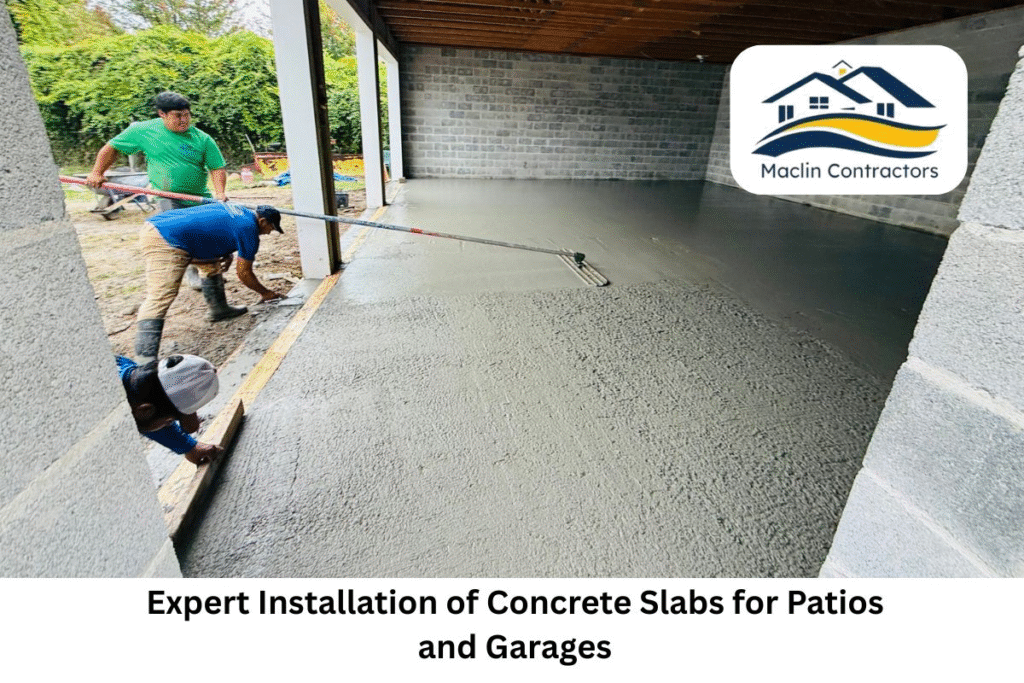
Concrete slabs may look simple on the surface, but in reality, they are the foundation of long-lasting patios, garages, and outdoor living spaces. When installed by experts, concrete slabs offer strength, durability, and visual appeal that can transform your property for decades. Whether you’re planning a new patio for weekend gatherings or a solid garage base that can handle heavy loads, professional installation makes all the difference.
Homeowners across the U.S. are choosing concrete slabs because they combine performance with flexibility. From classic broom finishes to creative stamped designs, concrete adapts to both modern and traditional homes. More importantly, a well-installed slab prevents common problems like cracking, sinking, and drainage issues. In this guide, we’ll walk you through everything you need to know, including costs, thickness, reinforcement, curing time, repairs, and more, so you can make confident decisions and get the best results possible.
Why Concrete Slabs Are Ideal for Patios and Garages
Concrete slabs are popular for a reason. They provide a firm, level surface that can handle foot traffic, vehicles, and outdoor furniture without shifting or failing. For patios, concrete offers a clean, versatile look that blends seamlessly with landscaping. For garages, it delivers the load-bearing strength required to support cars, trucks, and storage equipment.
Additionally, concrete slabs are low-maintenance compared to other materials. With proper installation and sealing, they resist weather damage, moisture, and wear. A professionally installed concrete slab on grade also improves drainage and prevents water from pooling near your home’s foundation. When done right, concrete slabs become a long-term investment rather than a short-term fix.
Understanding the Cost of Concrete Slab Installation
One of the first questions homeowners ask is about the cost of concrete slab installation. While prices vary depending on location, slab size, thickness, and finish, professional installation often saves money in the long run. Cheap or DIY work may seem appealing at first, but mistakes can lead to cracking, sinking, or uneven surfaces that require costly repairs later.
Factors that influence cost include site preparation, reinforcement materials, decorative finishes, and labor expertise. For example, stamped or decorative slabs cost more upfront but add significant visual value. Working with trusted professionals like those at Maclin Contractors ensures transparent pricing, quality materials, and results that last. In most cases, investing in expert installation delivers better durability and higher property value.
How to Pour a Concrete Slab the Right Way
Many homeowners search for how to pour a concrete slab, but the process is more complex than it appears. Proper pouring starts with thorough site preparation, including excavation, grading, and soil compaction. A stable base is essential to prevent future settling or cracking.
Next, professionals install formwork and reinforcement before pouring the concrete—timing, weather conditions, and mixing consistency all matter. Once poured, the slab must be leveled, finished, and protected during curing. Skipping any step can compromise the slab’s strength. That’s why professional contractors follow proven methods to ensure a smooth, even, and durable surface every time.
Concrete Slab Thickness and Reinforcement Explained
Thickness plays a critical role in slab performance. While patios often require thinner slabs, garages and driveways demand more strength. Understanding concrete slab thickness for driveway standards helps ensure the slab can handle vehicle weight without cracking or shifting.
Equally important is concrete slab reinforcement. Steel rebar or wire mesh adds internal strength and helps distribute loads evenly. Reinforcement reduces cracking caused by temperature changes and ground movement. Professionals assess soil conditions and intended use to determine the right thickness and reinforcement strategy. This tailored approach ensures your patio or garage slab performs reliably year after year.
Creative and Functional Stamped Concrete Slab Ideas
Concrete doesn’t have to be plain. Today’s stamped concrete slab ideas allow homeowners to achieve the look of stone, brick, or wood at a fraction of the cost. These decorative finishes are perfect for patios, pool decks, and outdoor entertainment areas.
Stamped concrete adds curb appeal while maintaining the strength of traditional slabs. Color options, textures, and patterns can be customized to match your home’s style. When appropriately sealed, stamped slabs resist fading and weather damage. Professional contractors ensure the stamping process is executed correctly, resulting in a beautiful, durable surface that stands out.
Concrete Slab Curing Time and Why It Matters
Many issues arise when curing is rushed or ignored. Concrete slab curing time is essential for achieving maximum strength and durability. While concrete may appear dry within a day or two, complete curing can take up to 28 days.
During this period, moisture control is crucial. Professionals use curing compounds or controlled watering to prevent premature drying, which can cause surface cracks. Proper curing improves resistance to wear, weather, and heavy loads. Simply put, patience during curing leads to a slab that performs better for decades.
Repairing and Leveling Existing Concrete Slabs
Even well-installed slabs may need attention over time. Repairing cracked concrete slab surfaces early prevents minor issues from becoming major problems. Small cracks can often be sealed or patched to restore strength and appearance.
For uneven surfaces, leveling sunken concrete slab techniques such as slab lifting or foam injection can restore alignment without replacement. Modern repair solutions, like those offered at Modern Concrete Repair Solutions, save time and money while extending the life of your concrete. Addressing problems early keeps your patio or garage safe and visually appealing.
Why Professional Concrete Installation Makes a Difference
Professional installation is about more than pouring concrete. It’s about planning, precision, and long-term performance. Experts understand soil behavior, drainage, reinforcement needs, and finishing techniques that DIY projects often overlook.
Working with experienced contractors like those at Concrete Construction Services ensures every detail is handled correctly. From design to final curing, professionals deliver results that enhance both function and appearance. In the end, expert installation provides peace of mind and lasting value.
Final Thoughts: Build Strong, Build Smart
Concrete slabs are the backbone of reliable patios and garages. When installed by professionals, they offer unmatched durability, flexibility, and visual appeal. By understanding costs, thickness, reinforcement, curing, and repair options, homeowners can make informed choices that pay off in the long term.
If you’re planning a new patio or garage slab, don’t settle for shortcuts. Choose expert installation to protect your investment and enjoy a flawless finish for years to come.
Frequently Asked Questions
How much does a concrete slab cost on average?
The cost depends on size, thickness, reinforcement, and finish. Professional installation ensures accurate pricing and long-term savings.
What is the ideal thickness for a garage slab?
Most garage slabs require a thickness of 4–6 inches, with proper reinforcement, to safely handle vehicle loads.
How long will it take before I can use my concrete patio or garage?
Light foot traffic is usually safe after 24–48 hours, but complete curing takes about 28 days for maximum strength.
Can cracked concrete slabs be repaired?
Yes, many cracks can be repaired without replacement if addressed early by professionals.
Is stamped concrete durable?
Absolutely. When installed and sealed correctly, stamped concrete is both durable and visually appealing.